1. Historical background
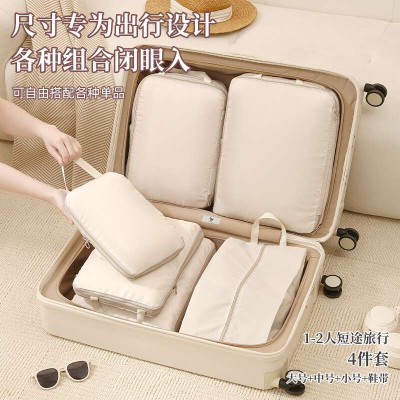
The travel four-piece set (usually referred to as a toiletry bag, storage bag, foldable slippers, eye mask/earbud combination) traces its origins to the custom leather toiletry bags used by European aristoclacies traveling in the 19th century. In the early 20th century, with the popularity of railroads and ocean liners, portable travel supplies became popular. After World War II, the explosive growth of aviation gave birth to the concept of the modern travel four-piece, with brands such as Samsonite and Rimowa introducing lightweight storage solutions. After the 21st century, business travel and lifestyle upgrades have made four-piece sets the standard for exquisite travel, and new forms such as environmental protection and intelligence have been derived.
2. Design features
Modular storage: Partition design (dry and wet separation, transparent sandwich) to improve space utilization.
Lightweight materials: Nylon, polyester or compostable materials reduce baggage burden.
Folding structure: such as silicone folding cup, inflatable neck pillow and so on to save space.
Humanized details: magnetic sealing, USB charging toiletry bag, adjustable eye mask strap, etc.
3. Intended purpose
Convenience: Integrate scattered supplies to avoid missing consignments.
Health security: Independently packaged toothbrush, disposable slippers to deal with hotel health problems.
Comfort upgrades: Relieve fatigue from long journeys (e.g., blackout eye mask, noise-cancelling earplugs).
4. Cultural connotation
Elite business symbol: Bound with the "flying man" lifestyle, representing efficiency and self-discipline.
Minimalism: Reflects the modern travel philosophy of "less but better" and fights against excessive consumption.
Global mobility: The product of the normalization of international travel, which implies the need for cultural adaptation.